
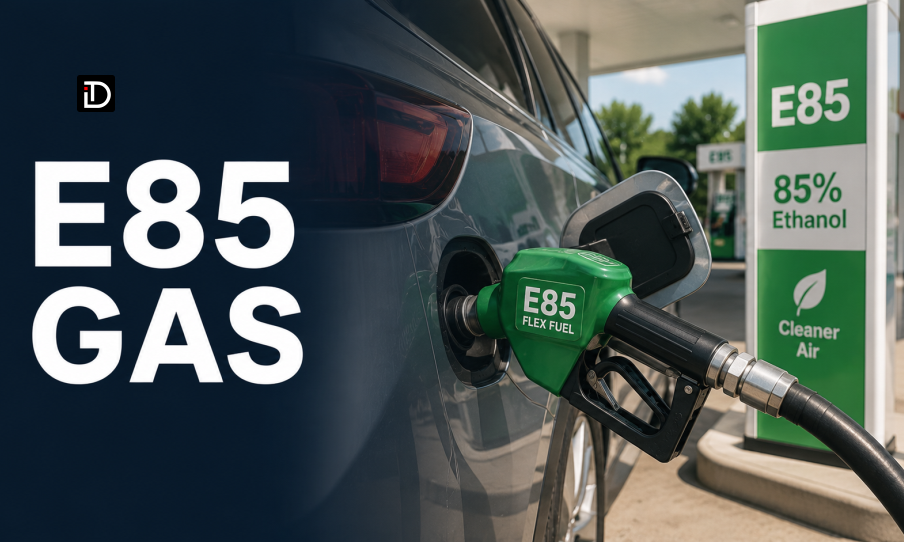
Cars change fast now, so people look for different fuels that work well but harm nature less. At gas stations, one option shows up more often – a mix with lots of ethanol. What makes e85 special lies in how engines handle it differently than regular fuel. If your goal is stronger power output, or just figuring out your car’s flex-fuel system, details matter here. Looking close at how this blend burns reveals differences you can measure when compared to ordinary petrol.
Understanding Mixed Alcohol Fuel at Gas Stations
Understanding this different choice starts by asking one thing – what exactly is e85, compared with ordinary gasoline? It’s a mix where ethanol joins gas in amounts ranging from 51% up to 83%, shifting slightly based on location or time of year. Ethanol gives the name its E, while the digits show how much ethanol can be in it at most. Grown mostly from corn across America, its roots tie deeply into crops rather than crude oil. That heavy dose of alcohol changes the way fire builds when the fuel ignites under compression in your motor.
Filling your tank with e85 means the engine handles something far less predictable than regular gasoline. Because it’s packed with ethanol from plants, the blend hits octane levels near one hundred three on average. Higher pressure inside cylinders becomes possible – timing can be sharper, too – all while avoiding damaging pings. Racers often grab this stuff not because it’s green, but because serious punch comes cheap. Power climbs noticeably when tuned right, even if the fuel burns faster than expected.
Performance Gains Versus Fuel Economy Tradeoffs
While the performance community frequently praises e85 gas for its cooling properties and resistance to detonation, everyday drivers must weigh these advantages against real-world efficiency. Because ethanol has a lower energy density than pure gasoline, an engine requires more volume of e85 fuel to achieve the exact same combustion stroke power as standard unleaded. This means that when you choose e85 fuel for your daily commute, you will experience a noticeable drop in fuel economy, typically ranging between fifteen and thirty percent. Your miles per gallon will decrease, requiring more frequent trips to the service station to keep your tank filled.
Despite the reduction in mileage, the internal cooling effect of this blend remains a massive engineering advantage. When e85 gas vaporizes in the intake manifold, it extracts heat from the incoming air charge far more effectively than standard gasoline. This lower intake temperature makes e85 fuel incredibly popular for turbocharged and supercharged vehicles, where managing heat is the key to maintaining consistent horsepower. If you are wondering what is e85 doing to your internal engine components, it acts almost like a chemical intercooler, keeping combustion temperatures down and protecting the pistons under heavy load conditions.
Vehicle Compatibility and Infrastructure Availability
Before pulling up to a yellow-colored nozzle at your local gas station, it is imperative to verify that your vehicle is certified to handle this high-ethanol blend. Vehicles specifically designed to run on this mixture are known as Flexible Fuel Vehicles, or FFVs, and they feature modified fuel lines, larger injectors, and specialized internal seals. Standard vehicles are not equipped to handle the corrosive nature of e85 fuel, as high concentrations of alcohol can rapidly degrade standard rubber hoses, aluminum fittings, and fuel pumps over time. An FFV utilizes a dedicated sensor to detect the exact ethanol percentage of the e85 gas entering the system, automatically adjusting the fuel injection timing in real time.
Finding a station that offers e85 gas can vary drastically depending on your geographic location. In major agricultural regions, e85 fuel is highly accessible and often priced significantly lower than regular unleaded to compensate for the lower fuel economy. However, in coastal areas or remote regions, drivers searching for what is e85 compatible might find limited infrastructure. If you plan to convert a standard vehicle to utilize e85 fuel safely, you will need an aftermarket conversion kit, upgraded fuel lines, and a custom computer tune to ensure the engine correctly maps the required volume increase.
The Environmental Outlook of High Ethanol Blends
From an environmental perspective, analyzing what is e85 reveals a complex but generally positive impact on global carbon emissions. Because the ethanol in e85 fuel is derived from crops like corn and sugarcane, the plants absorb carbon dioxide from the atmosphere while growing, creating a closed-loop cycle. When you burn e85 gas, the tailpipe emissions contain significantly fewer toxic pollutants, hydrocarbons, and carbon monoxide compared to conventional petroleum products. This makes e85 gas a viable transitional fuel as the global transportation sector works toward reducing its overall carbon footprint.
Ultimately, deciding whether to utilize this high-octane alternative depends entirely on your driving goals, your local fuel pricing, and your vehicle’s mechanical capabilities. For the performance tuner, e85 fuel represents a budget-friendly path to massive horsepower gains and superior engine cooling. For the everyday commuter driving a flexible-fuel vehicle, e85 gas offers a renewable choice that supports local agriculture, provided the lower price at the pump offsets the drop in overall fuel efficiency. By understanding exactly what is e85 and evaluating its distinct tradeoffs, you can make an informed decision that aligns with your budget, your vehicle, and your personal environmental values.