
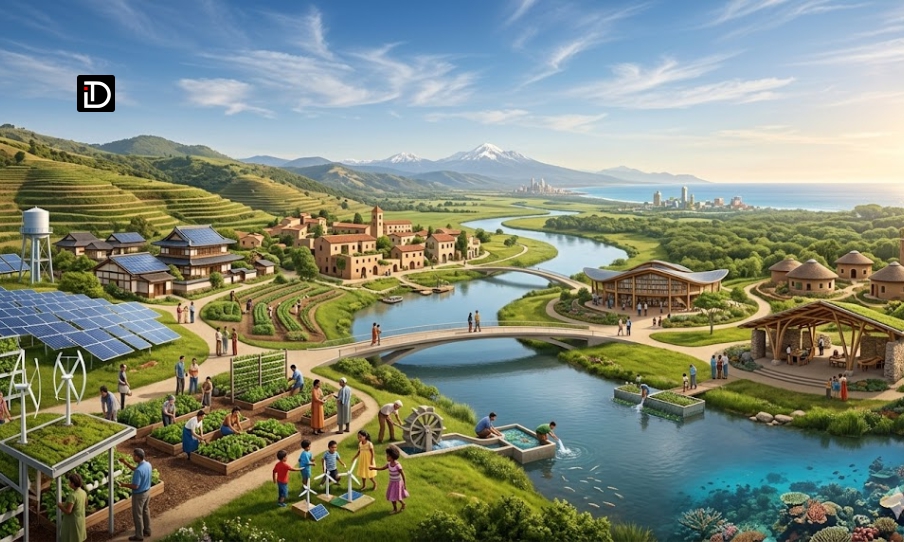
Talking about long-term peace involves looking at how caring for nature shapes whether people fight or cooperate. When supplies shrink, tensions rise – so building systems that renew instead of drain can help keep things calm. Lasting quiet does not come just from agreements on paper but from healthy soil, clean water, and balanced ecosystems beneath our feet. Tending to forests, rivers, and fields quietly strengthens trust between communities who share them. Peace grows not only in words but also in roots.
How Fair Access to Resources Affects Social Peace
Chasing lasting peace through sustainability means changing who gets what – especially when it comes to clean water, farmable soil, or scarce metals. Scarcity tends to push people to move, spark uprisings, even ignite fights between countries. Once a place can’t grow food or keep water flowing, frustration builds fast – and so does instability. Instead of waiting, some governments now adopt smarter farming methods; they also craft fairer deals on sharing rivers and aquifers. Because of this shift, tensions linked to survival start losing their grip. This careful work on global environmental issues helps meet people’s essential needs, which lessens the pull of extremism and conflicts sparked by scarce resources. Starting with soil, air, and water, it shapes a planet where nature connects nations instead of dividing them through power struggles.
Ecological Resilience as a Foundation for Lasting Security
True security is no longer defined solely by military strength but by the resilience of the ecosystems that provide for a nation’s citizens. Integrating sustainability peace into national security frameworks allows governments to view climate change and habitat loss as direct threats to the social contract. A resilient forest or a healthy ocean provides consistent livelihoods, which in turn foster a sense of individual and collective purpose. When people have a stake in the longevity of their natural surroundings, they are more likely to invest in communal harmony. This synergy between the land and the people creates a feedback loop where environmental protection yields social dividends. As we transition to renewable energy sources and circular economies, we are not just saving the planet; we are architecting a framework for global safety that transcends traditional borders.
Indigenous Wisdom and Local Governance in Conflict Prevention
Much of the groundwork for sustainability peace can be found in the ancestral knowledge of indigenous communities who have lived in harmony with their environments for millennia. These cultures often possess sophisticated methods for conflict resolution that are inextricably linked to land stewardship. By elevating these local voices to the international stage, we gain access to proven strategies for managing common-pool resources without resorting to violence. Empowering local governance ensures that those most affected by environmental changes have the agency to protect their homes sustainably. This decentralization of power promotes a more nuanced version of peace, one that is rooted in the daily reality of those who work the soil. It reminds us that global stability is built from the ground up, starting with the respect we show to the smallest patches of wilderness.
Rethinking Progress Through the Lens of Collaborative Restoration
Moving forward, the international community must redefine progress not by industrial output alone, but by the health of the intersection between nature and human society. This involves a commitment to sustainability peace that prioritizes the restoration of degraded landscapes as a means of healing historical wounds between warring factions. Transboundary conservation areas, often called “peace parks,” serve as physical manifestations of this ideology, where nations collaborate to protect shared biodiversity. Such initiatives prove that the environment can be a unifying force that heals the scars of past divisions. When we invest in the earth, we are making a downpayment on a future where the sound of progress is not the roar of machinery, but the steady pulse of a thriving, quiet landscape.
A Transformed Perspective on Our Shared Global Future
The path toward a harmonious existence is paved with the green initiatives we choose to champion today. We are entering an era where the survival of the human spirit is dependent on our ability to maintain the integrity of our biosphere. Emphasizing sustainability peace is not a utopian dream but a pragmatic necessity for the survival of complex civilizations. As we innovate new technologies and social structures, the underlying goal remains constant: to live in a way that does not borrow from the futures of our children or the stability of our neighbors. By choosing the path of ecological mindfulness, we are effectively choosing a world without the shadows of resource-driven strife. Our legacy will be defined by whether we viewed the earth as a treasury to be looted or a garden to be tended in unison.