
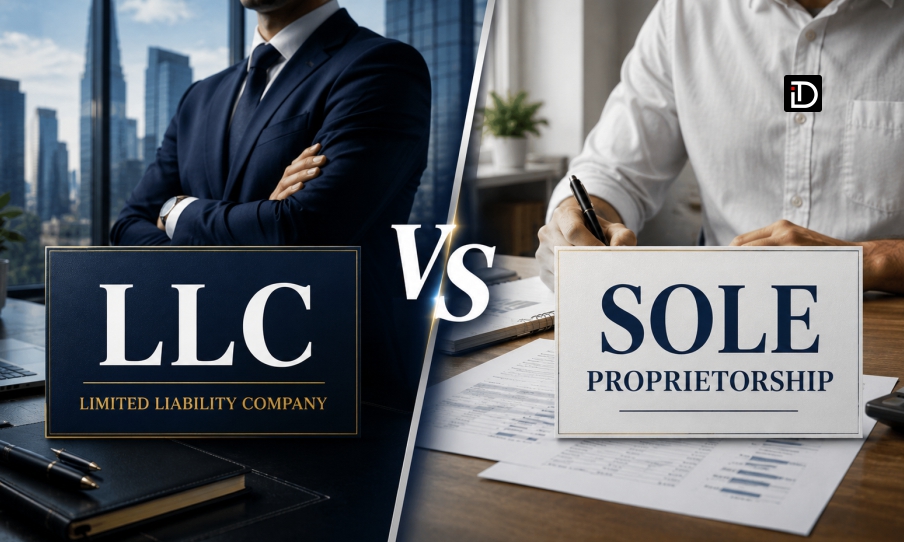
Starting a business is a thrilling experience. However, one of the most challenging things to do when registering the enterprise is to select a legal structure for it. The choice of one or another option usually has rather decent consequences in the future. Therefore, one needs to be especially careful making that particular choice. The two most popular structures that modern businessmen choose and register are Limited Liability Company (LLC) and Sole Proprietorship. Both options have their own advantages and disadvantages.
Despite their similarities and differences, both structures have one common thing – they are the preferred choice for many small businesses. However, there are also significant distinctions between them, the knowledge of which can prevent future mistakes that may be rather expensive in the long run.
Differences Between an LLC and a Sole Proprietorship
To begin with, it is essential to distinguish the two structures and clarify their differences and peculiarities. Sole proprietorship is the easiest way to start doing business since it does not require substantial paperwork for registration.
Besides, the owner of such a business does not need to file any additional forms at the end of the year. On the other hand, one should be exceptionally careful about separating the obligations of one’s enterprise and personal finances since they both are legally considered as one.
An LLC or Limited Liability Company, in its turn, is the separate legal entity one creates, thus getting the right to operate under that name with no additional requirements. In other words, it is necessary to register the company with the state, while one’s business and personal assets remain separated.
When comparing LLC vs sole proprietorship, the primary distinction lies in the legal separation between the owner and the business. This difference often influences many other aspects of business management.
Liability Protection and Financial Risk
One of the biggest reasons entrepreneurs choose an LLC is the protection it offers against personal liability. If the business faces a lawsuit, defaults on loans, or accumulates debts, the owner’s personal assets—such as a home, savings, or personal vehicle—are generally protected, provided legal requirements are properly followed.
In contrast, a sole proprietor has unlimited personal liability. Since there is no legal distinction between the business and its owner, personal assets may be used to satisfy business obligations if financial problems arise.
This becomes especially important for businesses that interact with customers, hire employees, sign contracts, or operate in industries with higher legal risks. The decision between LLC vs sole proprietorship often comes down to how much personal financial protection an entrepreneur wants while running the business.
Taxation, Costs, and Administrative Requirements
Tax treatment is another major factor when selecting a business structure. A sole proprietorship offers straightforward taxation because business income and expenses are reported directly on the owner’s personal tax return. There is no separate business income tax filing in most situations, making tax preparation relatively simple.
An LLC also offers flexibility in taxation. By default, a single-member LLC is generally taxed similarly to a sole proprietorship, with profits passing through to the owner’s personal return. Depending on business needs, an LLC may also elect alternative tax treatment if it becomes financially advantageous.
The trade-off comes in formation and maintenance costs. Establishing an LLC usually involves state filing fees, annual reports, and compliance requirements that vary by jurisdiction. A sole proprietorship typically avoids these formalities, making it less expensive to start and maintain.
When evaluating LLC vs sole proprietorship, entrepreneurs should weigh whether the additional legal protection justifies the higher administrative responsibilities.
Growth Potential and Business Credibility
As a business expands, its structure can influence customer confidence, funding opportunities, and long-term scalability. Many clients, suppliers, and financial institutions perceive an LLC as a more established and professional business entity. This perception can sometimes make it easier to secure contracts, obtain financing, or attract strategic partnerships.
Although many successful businesses begin as sole proprietorships, growth may eventually require a more formal structure. Bringing in partners, seeking investors, or separating personal and business finances often becomes easier under an LLC.
Business continuity also differs. A sole proprietorship generally ends when the owner retires, passes away, or stops operating. An LLC can often continue operating under state regulations, making succession planning simpler.
For entrepreneurs with long-term ambitions, the discussion of LLC vs sole proprietorship extends beyond today’s needs and considers where the business may be several years from now.
Making the Right Choice for Your Business
There is no universal answer because every business has unique goals, financial circumstances, and risk levels. A freelance graphic designer working independently may value the simplicity and low cost of a sole proprietorship. Meanwhile, an e-commerce business selling products nationwide may benefit significantly from the liability protection and credibility offered by an LLC.
Before making a final decision, consider factors such as expected revenue, business risks, future hiring plans, regulatory requirements, and personal financial exposure. Consulting a qualified legal or tax professional can also provide guidance based on your specific situation.
Ultimately, the debate over LLC vs sole proprietorship is not about determining which structure is universally better. Instead, it is about identifying which option aligns most closely with your business objectives, risk tolerance, and long-term vision. Choosing wisely from the beginning can provide greater peace of mind while positioning your business for sustainable success.