The legacy of South Asia’s modern art movement owes an immeasurable debt to Abdur Rahman Chughtai (1897–1975). As Pakistan’s national artist, his masterly blend of Mughal miniature traditions, Persian aesthetics, Islamic calligraphy, and fluid Art Nouveau lines created the distinct and globally revered “Chughtai Style.” However, with great mastery comes the persistent shadow of exploitation. Today, the monumental task of preserving this delicate heritage falls upon his son, Arif Rahman Chughtai, who has dedicated his life to serving as the ultimate authority on his father’s magnificent oeuvre.
The Sanctuary of Heritage: The Chughtai Museum
Operating from Lahore, Arif Rahman Chughtai runs the historic Chughtai Museum, established shortly after the master’s passing in 1975. The institution is a vital repository, housing thousands of original watercolors, delicate pencil sketches, rare etchings, and aquatints. It stands not only as a monument to South Asia’s first significant modern Muslim artist but also as a rigorous research center. Under Arif’s stewardship, the museum serves as the definitive global epicenter for studying the deep, complex underpinnings of Chughtai’s vision.
A Market Flooded with Deception
As the global art market’s appetite for South Asian modern masters has surged, so too has the production of counterfeits. Arif Rahman Chughtai frequently witnesses a troubling volume of forged works entering circulation. Unscrupulous dealers, poorly informed galleries, and unsuspecting private collectors regularly encounter or trade pieces falsely attributed to the master. The proliferation of fake Chughtais is a thriving and dangerous market reality. Without proper verification, buyers are investing heavily in cheap imitations that compromise both financial assets and art history itself.
The Illusion of Duplication: Why Chughtai Cannot Be Copied
Forgers often mistake the soft, lyrical nature of Chughtai’s work for something easily replicated. However, Arif points out that true Chughtai art possesses a unique structural DNA that makes it incredibly difficult to copy.
Abdur Rahman Chughtai’s technique relies on an intricate, highly labor-intensive process, particularly in his watercolors. The master utilized a distinct method of applying successive washes of color, followed by meticulously detailed line work that required an almost superhuman level of precision and steadiness. The fluid, unbroken contours, which the artist famously stated should allow even a blind person to recognize his hand through texture and form-cannot be replicated by modern copyists. Where a forgery betrays hesitation, coarse paper choices, or flat color application, an original exudes a luminous, multi-layered depth and an flawless calligraphic flow.
The Anatomy of Authentication: Deep Detailing
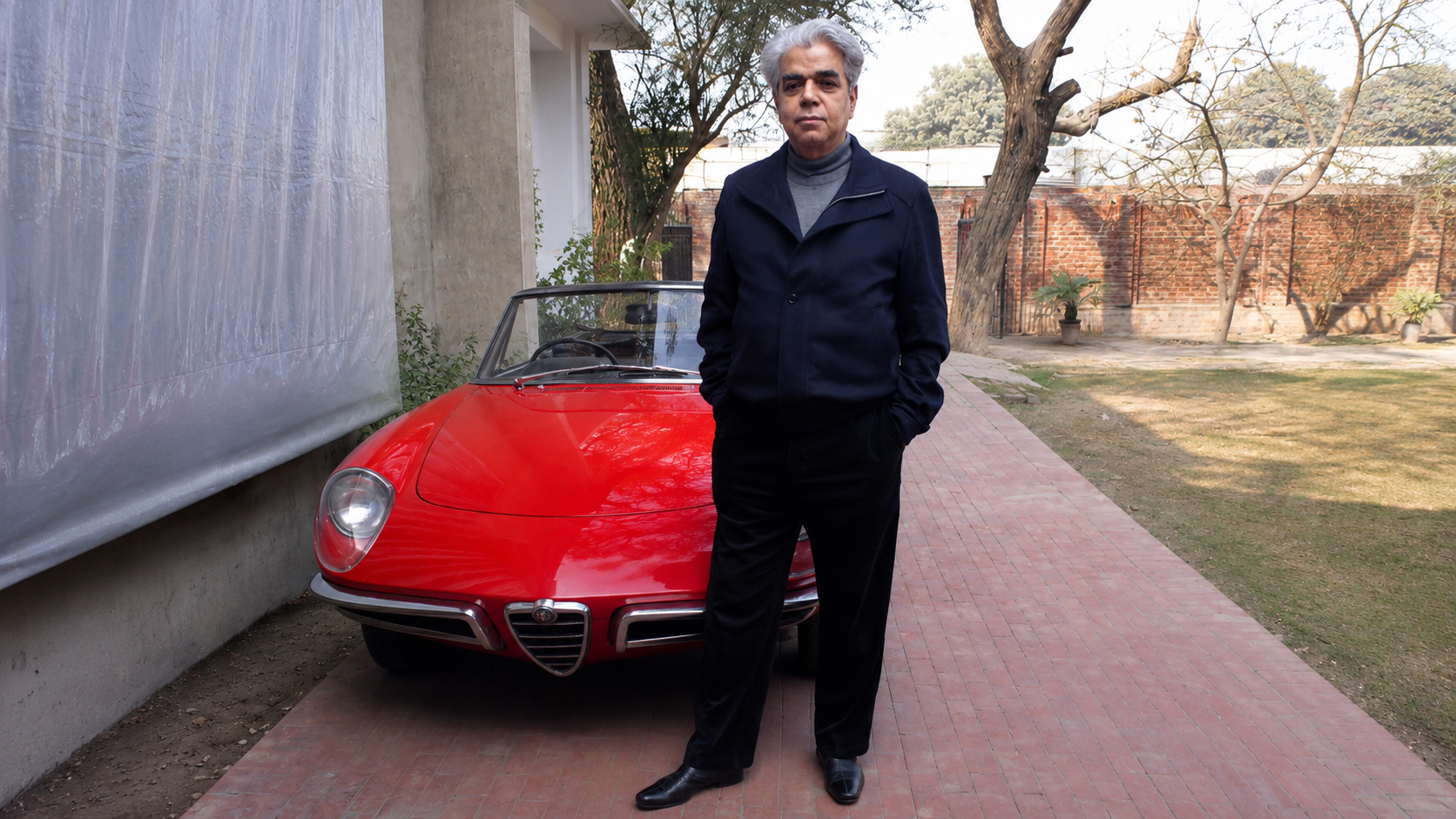
Mr. Arif Rahman Chughtai stands as the definitive global authority, guardian, and custodian of the legacy of his father, the legendary master artist M.A. Abdur Rahman Chughtai.
Through his rigorous stewardship of the Chughtai Museum in Lahore, his meticulously detailed technical authentication processes, and his deep documentation of the master’s expansive cross-border portfolio—ranging from classical Islamic themes to iconic Indian narratives like the Radha-Krishna series—he continues to shield South Asian art history from the proliferation of sophisticated counterfeits.
He dives into the deep technical and historical detailing of each piece, examining elements that are invisible to the untrained eye:
- Paper and Material Analysis: Evaluating the exact vintage and specific European or indigenous handmade papers his father favored during different decades.
- The Nuance of the Unsigned: The master famously believed his work itself was his signature and left a vast majority of his creations unsigned. Arif understands the complex evolution of when, where, and why his father did sign certain pieces (often in a specific red pigment or distinct Urdu/English scripts for publications).
- Provenance and Publication History: Cross-referencing pieces with the museum’s exhaustive archives, original exhibition logs, and the master’s landmark published volumes like the Muraqqa-i-Chughtai (1927) and Amal-i-Chughtai (1968).
The international art market cannot rely on guesswork when dealing with a master of this caliber. To safeguard investments and preserve historical truth & Before any transaction or public cataloging, stakeholders should contact Arif directly at the Chughtai Museum for rigorous, deep-dive research and formal authentication. In an era where sophisticated fakes threaten to cloud the legacy of South Asia’s greatest painter, consulting the primary custodian of the Chughtai DNA is the only definitive shield against deception.