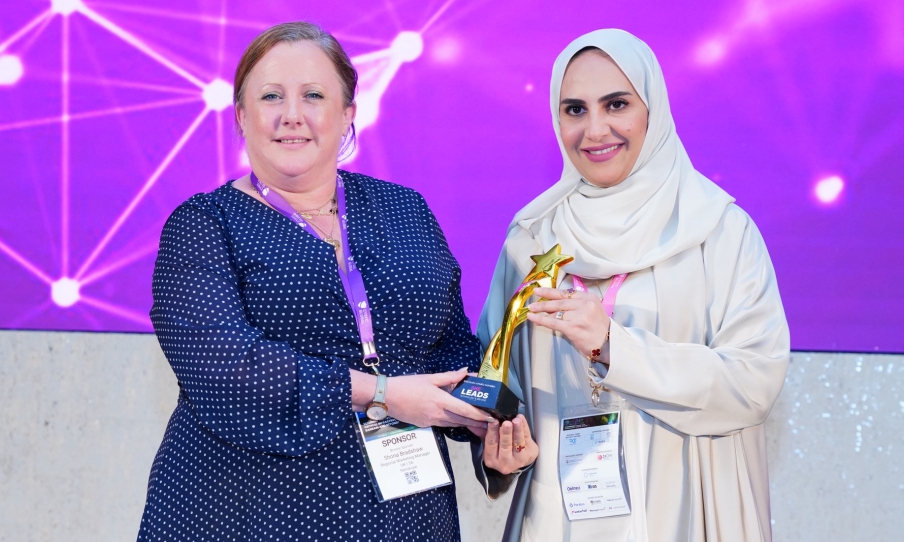

The worldwide winds of business have shifted from peripheral growth to global platforms. Samantha Evans views this current momentum, especially in the Middle East and Africa, as a structural reconfiguration of how global economies commercialize technology. As the Managing Director for the GCC & Africa at Startup Genome, and recognized as one of Arab’s 30 Most Influential Leaders in Tech to Follow in 2026, she brings over fifteen years of global innovation ecosystem development experience to the region. Having previously scaled Tech Nation overseas and spent nearly a decade in Silicon Valley and New York advising high-growth giants like Uber and Airbnb while at the UK Government, Samantha knows how mature networks operate. Her current work at Startup Genome centers on translating one of the world’s most comprehensive datasets and benchmarking frameworks on innovation ecosystems into actionable policy, investment, and commercialization strategies for governments, investors, and innovation agencies. Drawing on comparative insights from ecosystems across North America, Europe, Asia, the GCC, and Africa, she helps leaders understand how innovation can be converted into long-term economic capability and competitiveness.
To her, what is happening in the GCC now goes beyond startup ecosystem growth in the traditional sense. “We are seeing certain cities transition into strategic capability platforms within the global economy.”
The Rise of Sovereign Institutional Infrastructure
The data within the 2026 Global Startup Ecosystem Report highlights specific regions that are moving past basic economic diversification toward industrial leadership. Abu Dhabi stands out as one of the clearest examples of that shift. A decade ago, much of the regional focus was on economic diversification and attracting international companies. Today, the conversation is increasingly about building sovereign capability across AI, advanced industries, energy systems, logistics, digital infrastructure, and industrial resilience. Samantha observes that this transition changes the role of the ecosystem entirely.
The city is no longer simply positioning itself as a destination for startups or international investment. It is building the institutional capability required to commercialize, deploy, and scale frontier technologies across the real economy.
That includes the coordinated development of sovereign-backed capital platforms, AI computing infrastructure, advanced regulatory frameworks, research institutions, industrial policy mechanisms, and direct pathways into major corporates and government-led transformation agendas.
What makes this significant is not any single initiative in isolation, but the degree of alignment emerging between capital, policy, infrastructure, talent, and commercialization. Increasingly, Abu Dhabi is positioning itself not just as a participant in the global innovation economy, but as a platform for shaping how frontier technologies are deployed at scale.
Redefining Competitiveness Through Scale and Deployment
This data-driven evolution occurs at a time when traditional western tech corridors face slower investment cadences and shifting macroeconomic pressures. Globally, we are entering a period where economic competitiveness will increasingly depend on the ability to integrate innovation into core industries quickly and at scale. Samantha notes that the ecosystems that succeed will not necessarily be the ones with the highest startup volumes alone, but those capable of translating innovation into deployment, industrial capability, and long-term resilience. This exact capability is where several GCC ecosystems are becoming globally significant, particularly as cities such as Dubai and Abu Dhabi increasingly combine global connectedness, sovereign-backed capital, commercialization infrastructure, and rapid deployment capacity into highly competitive innovation platforms.
By anchoring new ventures directly to massive enterprise buyers, national ministries, and industrial conglomerates, regional policymakers ensure that new technologies find immediate commercial applications.
A Network of Interconnected Regional Nodes
This macroeconomic shift is manifesting differently across GCC cities, creating a highly interconnected network of specialized ecosystems rather than isolated national markets.
Riyadh continues to scale aggressively due to the size of the domestic market and the pace of economic transformation underway across Saudi Arabia. Doha is increasingly positioning itself around AI, sports innovation, research commercialization, and advanced digital infrastructure. Abu Dhabi is building strength across AI, sovereign-backed deep technology, advanced industries, and institutional infrastructure for commercialization.
Rather than competing through identical models, these ecosystems are evolving complementary specializations shaped by their economic priorities, industrial strengths, regulatory approaches, and long-term national strategies.
Dubai continues to play a particularly important role as the Gulf’s most globally connected commercial and entrepreneurial hub. Its concentration of international talent, private-sector density, smart capital, logistics connectivity, and founder-friendly operating environment has positioned the city as a critical gateway between Europe, Asia, Africa, and the wider Middle East.
Samantha believes Dubai is now entering a new phase of ecosystem maturity. Moving into the world’s top tier of innovation ecosystems over the next decade is increasingly achievable, but it will require stronger coordination across key ecosystem stakeholders, including government entities, investors, corporates, universities, and innovation platforms.
The next stage of growth will depend less on isolated initiatives and more on ecosystem orchestration: aligning talent, capital, commercialization pathways, infrastructure, and sector specialization into a more integrated regional innovation system.
Dubai’s greatest advantage may ultimately be its ability to combine global connectedness, entrepreneurial energy, regulatory agility, and quality of life into a platform that attracts both founders and international scaleups looking to build across multiple markets simultaneously.
The broader shift is that GCC cities are no longer behaving like emerging ecosystems on the periphery of the global economy. Increasingly, they are operating as interconnected economic nodes with differentiated capabilities across AI, finance, logistics, energy systems, advanced manufacturing, and digital infrastructure.
Through Startup Genome’s work with ecosystems across North America, Europe, Asia, the GCC, and Africa, she has observed that the regions progressing fastest are increasingly those capable of aligning capital, infrastructure, commercialization, and talent into coordinated innovation systems.
As regulatory frameworks mature and public-private coordination deepens, the GCC is becoming increasingly attractive to international scaleups seeking faster deployment environments, access to sovereign-backed capital, and direct integration into large-scale economic transformation agendas.
Cross-Continental Integration and Complementary Ecosystems
Through Startup Genome’s advisory and ecosystem benchmarking work across both regions, Samantha is helping shape a growing strategic alignment between the GCC and Africa, redefining how both regions participate within the global innovation economy. Historically viewed as separate markets, they are increasingly evolving into interconnected economic systems linked through infrastructure, capital, technology, logistics, and industrial transformation.
The relationship is becoming important not simply because of investment flows, but because the two regions possess highly complementary strengths at a moment when the global economy is restructuring around resilience, strategic capability, and new technology infrastructure.
The Gulf contributes sovereign capital, advanced infrastructure, industrial coordination, logistics connectivity, and the ability to deploy large-scale transformation agendas rapidly. African ecosystems contribute demographic momentum, entrepreneurial density, mobile-first innovation models, adaptive business environments, and rapidly expanding technical talent ecosystems.
Together, these strengths are creating the foundations for a new innovation corridor with growing global relevance.
Samantha observes that the next phase of this relationship will be defined less by traditional development models and more by integrated commercial systems spanning AI infrastructure, energy transition technologies, logistics modernization, food resilience, fintech, climate technologies, digital commerce, and cross-border industrial corridors.
Many African ecosystems have become highly effective at innovating under infrastructure constraints, particularly across fintech, mobility, climate adaptation, logistics, and digital services. Those capabilities are increasingly valuable globally because they are designed for scalability, resilience, and operational efficiency from the outset.
At the same time, GCC economies are investing heavily into AI infrastructure, industrial transformation, ports, advanced manufacturing, energy systems, and digital public infrastructure. Combined, these regions are creating some of the world’s largest real-world deployment environments for frontier technologies.
Samantha believes one of the biggest misconceptions globally is that startup ecosystems compete primarily through venture capital alone. Increasingly, the more powerful advantage is the ability to commercialize and deploy innovation rapidly into large economic systems.
That is where the GCC-Africa corridor may become uniquely competitive over the next decade.
The Systems Playbook for Advanced Economic Integration
Samantha applies the core lessons from her work in Silicon Valley, Asia Pacific and the United Kingdom to reshape how public institutions measure innovation. Her previous experience scaling Tech Nation demonstrates that strong ecosystems are complex systems rather than simple marketing exercises. She advises GCC governments to move past traditional vanity metrics, such as the sheer number of workshops delivered or delegations hosted. Instead, her data-driven approach focuses on actual commercial outcomes, tracking whether startups are increasing revenue, securing major corporate contracts, hiring top-tier international talent, and scaling globally. Samantha notes that the ecosystems progressing fastest are moving beyond traditional startup support models. They are increasingly building integrated innovation architectures that connect industrial policy, AI adoption, sovereign investment, infrastructure development, talent strategy, and commercialization pathways. The strongest innovation agencies now behave less like slow administrative bodies and more like fast-growth companies, serving as orchestrators of entire national innovation systems.
The Compounding Advantage of Niche Cluster Dominance
Samantha actively guides regional ministries away from building generic technology hubs, advocating instead for deep specialization. She observes that the next phase of global competition is between highly specialized economic clusters with deep strategic advantages. When a capital city develops a clear specialization, it triggers a powerful compounding effect, attracting the exact founders, researchers, and venture capitalists needed to dominate that specific domain. This specialized approach is particularly critical as technologies like cybersecurity, advanced manufacturing, energy systems, and AI become foundational layers of national economic resilience. Rather than attempting to copy the unique historical trajectory of Silicon Valley, cities across the Gulf are building globally differentiated positions around their specific structural strengths, linking their technology pipelines directly to large-scale industrial transformation agendas and agile regulatory frameworks.
Advanced Metrics for an Accelerated Technological Era
Samantha reshapes how international investment committees evaluate macroeconomic health by looking far beyond basic funding volumes. In a technologically accelerated global economy, traditional indicators like venture capital density or baseline GDP fail to capture the true operational capacity of a market. Drawing on Startup Genome’s global benchmarking work across hundreds of innovation ecosystems, Samantha and her colleagues increasingly focus on leading indicators such as commercialization velocity, enterprise adoption, procurement access, founder connectedness, and the depth of AI integration into core industries.
Recent research at Startup Genome has shown that artificial intelligence compresses traditional growth timelines dramatically, meaning that ecosystems moving too slowly risk becoming passive consumers of technology rather than creators of globally competitive capability. The true measure of a modern tech corridor rests on whether new ventures can access real economic systems quickly, deploying active solutions into regional logistics networks, healthcare systems, and energy infrastructure. Through Startup Genome, she highlights how the Arab world improves rapidly across these dimensions, particularly by leveraging public-private coordination to act as an active market creator for breakthrough technologies.
The Human Mechanics of Permanent Ecosystem Formation
Samantha treats the global war for talent as a human-centric challenge that requires structural stability rather than short-term financial incentives. Having been nominated for a UAE Golden Visa herself, she understands that high-skilled individuals build businesses differently when they feel long-term opportunity and personal permanence. Innovation ecosystems are ultimately human systems where founders, researchers, and executives make life decisions about where to take risks and raise families. The GCC becomes increasingly competitive globally by providing this security alongside world-class digital infrastructure. However, as regional leaders look toward 2030, the primary policy challenge shifts toward preparing the massive local youth population for a labor market changing faster than traditional education systems can adapt. Samantha emphasizes that the biggest global shortage is no longer simply startup founders, but experienced operators and scaleup executives who know how to commercialize and scale technology. She continues to advise regional ministries on building continuous learning frameworks, tracking how these educational shifts affect international talent migration patterns.
Overcoming Institutional Fragmentation and Speed Barriers
Samantha actively bridges the cultural gap between stable public sector regulations and the high-velocity operational needs of tech scaleups. She observes that governments are naturally designed to deliver stability and manage risk carefully, while startups exist to move quickly, experiment constantly, and iterate under uncertainty. To resolve this inherent tension, she pushes for deep structural alignment across procurement, capital, and infrastructure, rather than relying on surface-level innovation rhetoric. A major operational hurdle she encounters is institutional fragmentation, where separate entities, investors, and universities attempt to build isolated initiatives or compete over the ecosystem narrative. This division slows down progress, which becomes a severe liability in sectors moving at the speed of artificial intelligence. If ecosystem stakeholders remain siloed, high-growth startups simply relocate to environments where commercialization cycles are shorter and decision-making happens faster. Samantha guides public agencies to transition from passive regulators into active market participants, helping them create early procurement pathways and testing environments so founders can access real economic systems immediately.
Embedding Tech Ecosystems into National Transformation
Samantha envisions a profound structural change across the GCC tech landscape, aiming to embed startups directly into the core systems of national transformation. She connects this technological chapter to the region’s historical capability, noting that over the past fifty years, Gulf nations have built world-class cities, airlines, and logistics hubs at a speed and scale that many once thought impossible. The next phase involves applying that exact culture of ambition to frontier technology commercialization, advanced manufacturing, and climate solutions. She works to ensure that founders become strategic contributors to industrial capability, rather than mere participants in isolated entrepreneurship programs. By tightly linking research, sovereign investment, and government procurement, Samantha helps the region design its own unique model of innovation-led growth. She monitors the accelerating trade flows along this new multi-regional corridor, tracking how these unified public-private networks establish long-term economic resilience.