
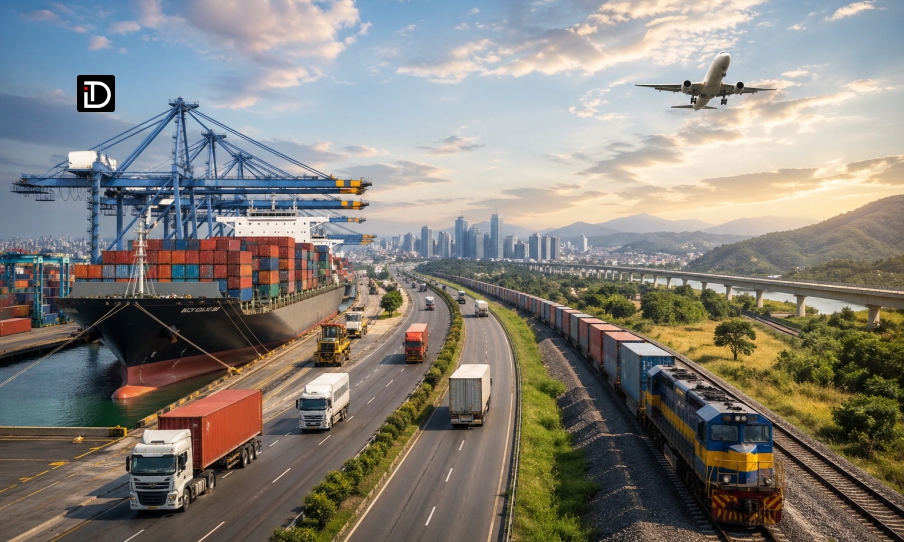
Goods move around the world through networks both concrete and electronic. Because nations want stronger economies, they build wider routes between factories and buyers. Instead of only highways or rails, these paths mix updated border checks, smart software, and upgraded transport links. When one country boosts its connections, it can ship faster than others nearby. With global influence changing hands, linking regions better helps stay relevant amid rising competition.
The Backbone of Today’s Supply Chains
Right where trade grows fast you will find heavy spending on mixed transport setups. Usually one sees deep-sea harbors working together with freight railways and wide roads built to move endless rows of cargo boxes. A country doing this shows others it means business when it comes to moving goods across continents. These structures do more than keep up with today’s needs – they open doors for fresh commerce in far-off areas once cut off from world markets. Changing how paths connect often pulls in follow-up projects like storage hubs, refrigerated yards, or sites that turn natural resources into finished products before shipment.
Big construction jobs like this usually demand teamwork between countries along with heavy spending. Still, gains from wider trade routes tend to beat early expenses over time. Because trips become shorter and ships burn less fuel thanks to straighter paths, economies grow while also helping nature stay balanced. What happens next surprises some: sensors and self-operating docks join the mix, turning concrete upgrades into live data systems. These links adapt fast when deliveries go off track, all because wires and machines talk without delay.
Harmonizing Policy and Streamlining Border Governance
While physical tracks and ports are the visible signs of growth, the legislative and regulatory framework behind trade corridor expansion is equally vital. Efficient movement of goods requires more than just a clear road; it requires a “soft infrastructure” of harmonized trade laws, simplified customs documentation, and bilateral agreements that minimize wait times at international borders. Without these policy alignments, even the most advanced physical corridor can become choked by bureaucracy. Successful expansions often involve the creation of “single-window” systems where all necessary permits and declarations can be handled through a unified digital portal, drastically reducing the potential for human error or corruption.
This regulatory evolution often leads to the establishment of special economic zones along the corridor. Within these zones, businesses enjoy tax incentives and streamlined regulations that encourage manufacturing and assembly. The synergy between physical trade corridor expansion and policy reform creates an environment where small and medium-sized enterprises can finally compete on an international scale. By lowering the “barrier to entry” for global trade, these corridors democratize economic growth, ensuring that the benefits of globalization are felt beyond the major metropolitan hubs and deep into the rural heartlands that the corridors traverse.
Geopolitical Implications and Regional Stability
The decision to embark on a major trade corridor expansion is rarely a purely economic one; it is often a strategic geopolitical move. By linking neighboring economies through shared infrastructure, nations create a state of mutual interdependence that can serve as a powerful deterrent to conflict. When multiple countries share a vested interest in the smooth operation of a specific rail line or port, they are more likely to cooperate on security and diplomatic fronts. This regional integration often leads to the formation of powerful trade blocs that can negotiate more effectively with larger global entities, providing a collective shield against market volatility.
However, these expansions also require a delicate balancing of interests. Financing often comes from international development banks or foreign direct investment, which can lead to complex debt dynamics. Navigating these relationships requires sophisticated diplomacy to ensure that the trade corridor expansion serves the long-term sovereign interests of all participating nations. When managed correctly, these projects transform landlocked countries into “land-linked” hubs, effectively rewriting the geographic destiny of entire subcontinents. The resulting shift in trade routes can redefine regional power dynamics, turning neglected transit points into bustling centers of commerce and culture.
Future Horizons for Integrated Global Networks
As we look toward the next decade, the focus of trade corridor expansion is shifting toward resilience and diversification. The lessons learned from recent global supply chain shocks have highlighted the danger of relying on a single, over-congested route. Consequently, there is a growing push to develop alternative corridors that provide redundancy and flexibility. These new paths are increasingly being designed with a “green” mandate, incorporating electrified rail and hydrogen-fueling stations to mitigate the carbon footprint of heavy logistics. The future of these corridors lies in their ability to be as sustainable as they are efficient, ensuring that economic growth does not come at the cost of the environment.
The digital layer of these networks will also continue to evolve, with blockchain technology potentially providing unalterable records of every transaction and movement along the route. This transparency builds trust between international partners and reduces the cost of insurance and financing for goods in transit. As trade corridor expansion continues to bridge the gaps between disparate markets, the world becomes smaller and more interconnected. The success of these initiatives will ultimately be measured not just by the tonnage of goods moved, but by the rise in living standards for the millions of people who live and work along these global arteries.
Final Perspectives on Connectivity
The evolution of these massive logistics networks represents a fundamental shift in how we perceive distance and economic potential. Rather than seeing borders as barriers, the philosophy behind trade corridor expansion views them as transition points in a seamless global journey. As infrastructure continues to catch up with the demands of a digital-first world, the physical paths we carve through mountains and across plains will remain the backbone of human progress. The continued refinement of these routes ensures that the global exchange of ideas, culture, and commerce remains vibrant and resilient for generations to come.
Read Also : The Phenomenal Career Success And Estimated Saad Lamjarred Net Worth In 2026