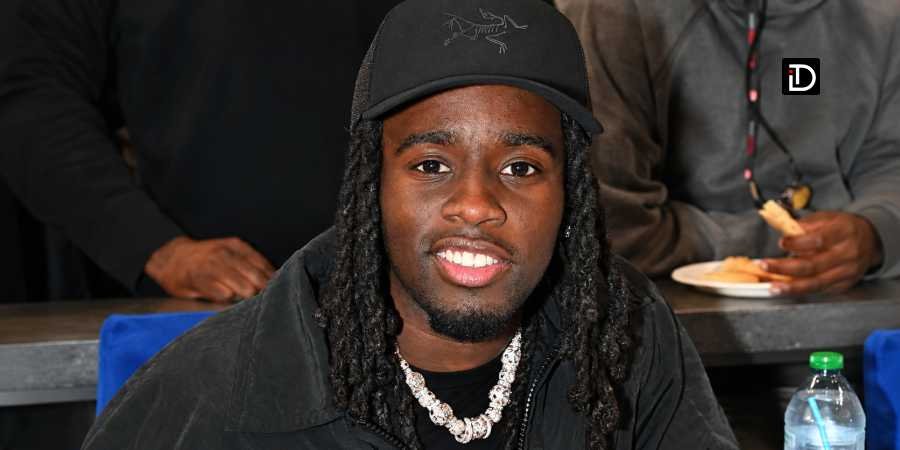
Livestreaming was once treated largely as a niche corner of internet culture, but Kai Cenat has helped turn it into something closer to mainstream entertainment. His streams can function like talk shows, comedy programs, celebrity events, gaming broadcasts and improvised reality television, often without the traditional boundaries separating those formats. What began with short comedy videos and gaming content has developed into a media operation capable of attracting global audiences, major celebrities and commercial partners.
The scale of Kai Cenat‘s rise became particularly clear during Mafiathon 3 in September 2025. The month-long streaming event pushed his Twitch channel beyond one million active subscribers, making him the first creator to reach that figure on the platform. Guinness World Records later recorded a peak of 1,095,265 subscribers on September 30, 2025.
Kai Cenat Turned the Stream into a Show
The foundation of Kai Cenat‘s business is not simply the ability to attract viewers. It is his understanding of live content as entertainment that people can return to repeatedly. His broadcasts mix gaming, conversations, comedy, music, celebrity appearances, challenges and spontaneous moments. That unpredictability gives viewers a reason to stay engaged because the next major moment cannot always be planned in advance.
Mafiathon illustrates this approach particularly well. The first edition in 2023 generated about 46 million hours watched, according to Stream Hatchet. Mafiathon 2 in 2024 climbed to roughly 83 million hours, while Mafiathon 3 reached approximately 82.5 million hours watched. The third event also brought appearances from figures including LeBron James, Kim Kardashian, Mariah Carey, Selena Gomez, Ed Sheeran and Ice Spice.
That guest strategy matters because it changes the economics of attention. A celebrity appearance can attract people who might not normally watch a gaming streamer, while the streamer gives the celebrity access to an audience accustomed to consuming entertainment in a much less formal setting.
Mafiathon Became a Business Model
The success of Kai Cenat‘s Mafiathon events shows how a livestream can become a recurring entertainment franchise rather than a collection of disconnected broadcasts. Each edition has a recognizable identity, a long-running narrative and milestones that audiences can follow. Subscriber targets become part of the story, while celebrity appearances and unexpected moments create additional reasons to return.
Mafiathon 3 pushed that model further. Stream Hatchet reported that the event accumulated 7.3 million hours watched on one particularly strong day, while the closing broadcast attracted more than one million peak concurrent viewers. The event finished with more than 1.1 million peak active Twitch subscriptions, according to records compiled after the broadcast.
The commercial significance goes beyond subscriptions. A giant live audience creates opportunities for advertising, sponsorships, merchandise, branded integrations and partnerships. The creator effectively becomes both the performer and the distribution channel.
Kai Cenat Expanded from Creator to Producer
Another important development in Kai Cenat‘s career is the increasing amount of content he creates around other creators. Streamer University, launched in 2025 at the University of Akron, was an especially clear example.
The four-day event brought approximately 120 aspiring creators together for a highly produced livestreaming experience. More than one million people reportedly applied for the opportunity to attend, while the University of Akron said viewers watched an estimated 23 million hours of Streamer University content.
That project revealed a different side of the business. Kai Cenat was no longer simply creating content for his own channel. He was creating an environment in which other personalities could become part of a larger entertainment product. The concept resembles elements of a television production, creator incubator and live event rolled into one.
TIME’s 2025 TIME100 Creators profile similarly described Streamer University as a four-day content-creator fantasy in which Cenat acted as both organizer and central performer.
The Audience Became the Distribution Network
The strength of Kai Cenat‘s model also comes from the way livestreaming interacts with social media. A long broadcast does not have to remain a long broadcast. A funny exchange, celebrity appearance or unexpected incident can be clipped and redistributed across YouTube, TikTok, Instagram and other platforms.
That creates a feedback loop. A person may discover a short clip on social media, watch a longer video on YouTube and eventually enter a live broadcast. The live audience then produces more moments that circulate elsewhere. The original stream effectively becomes a content engine rather than a single piece of content.
The scale of that engine was visible in 2025. A yearly livestreaming report from Stream Hatchet estimated that Kai Cenat recorded 131.9 million hours watched across platforms during the year, making him the most-watched streamer in its overall ranking. Nearly two-thirds of that viewing came from Mafiathon 3.
Kai Cenat Built Cultural Connections Beyond Streaming
The evolution of Kai Cenat has also been shaped by collaborations outside the conventional creator ecosystem. His streams increasingly bring together musicians, athletes, actors, influencers and internet personalities. That creates cultural crossover and helps livestreaming operate more like mainstream entertainment.
His relationship with major figures such as LeBron James is particularly useful from a business perspective because it demonstrates that the boundaries between traditional celebrity culture and creator culture are becoming less distinct. When a global sports figure appears inside a livestream rather than a television interview, the surrounding production can feel more spontaneous and immediate.
At the same time, the format remains rooted in the personality of the creator. A celebrity guest can generate attention, but the stream still depends on the host’s ability to keep the interaction entertaining. That makes the personality itself an important commercial asset.
A Different Kind of Entertainment Company
The most interesting aspect of Kai Cenat‘s business is that it does not look exactly like a conventional media company. There is no traditional television schedule separating programs from audiences. The audience can participate through chat, subscriptions and social reactions while the content is being produced.
That immediacy creates both opportunity and pressure. Traditional entertainment can be carefully edited before reaching an audience. Live content is exposed to unpredictability, and creators must constantly manage attention while remaining authentic enough to keep viewers invested. The enormous scale of Mafiathon shows what can happen when that model works, but it also illustrates how dependent the business can become on sustained audience engagement.
By 2026, Kai Cenat‘s career represents something larger than the success of one Twitch channel. He has demonstrated how livestreaming can support recurring entertainment franchises, celebrity collaborations, creator education, digital distribution and commercial partnerships. His official website now presents Mafiathon 3, Streamer University and his major creator achievements as parts of the broader Cenat brand.
The next stage may therefore be less about proving that livestreaming can attract huge audiences and more about showing how far that audience can support a diversified entertainment business. Kai Cenat has already demonstrated the power of the live format. His larger achievement is showing that a creator can turn attention itself into an entertainment infrastructure, with the livestream serving as the central stage and everything around it becoming part of the business.