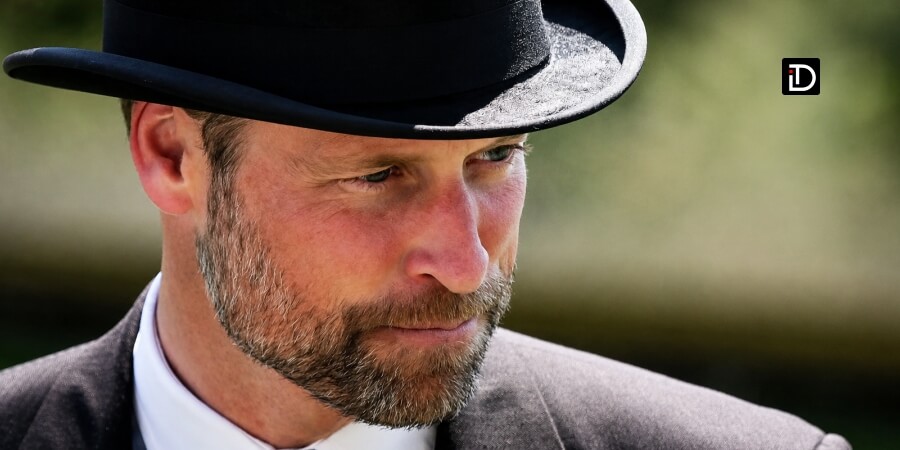
How Prince William Is Redefining the Role of a Future Monarch
Prince William has this weird blend of constitutional duty, global visibility, and personal expectations that feels oddly specific in a way not many other contemporary people carry. He was born on 21 June 1982 at St Mary’s Hospital in London, and from the start he was second in line to the British throne.
Later, when his father, King Charles III, became monarch in September 2022, he then stepped into the role of heir apparent. And at the same time, his public work kept drifting away from just ceremonial appearances and closer to environmental action, efforts aimed at homelessness prevention, mental health support, conservation, and community-centred initiatives, kind of all of it together. Now 44 years old, the Prince of Wales sits in a distinctive spot within the British monarchy.
His responsibilities mix centuries old constitutional custom, with a newer kind of expectation that senior royals should show real, measurable social results not just symbolic gestures. That shift matters because it helps explain how the British monarchy is adapting to a public world that is constantly changing.
A Career Built Around Service
Prince William’s public life has been moulded partly by what he did outside the usual royal bubble. After uni, he completed a 44-week officer training course at the Royal Military Academy Sandhurst and was commissioned into the British Army in December 2006.
Later on, he built a flying career with the Royal Air Force, training as a search-and-rescue pilot. Roughly over three years as an RAF search and rescue pilot, he took part in 156 search-and-rescue operations. He also went on a pretty standard operational deployment to the Falkland Islands and qualified as an operational captain.
Overall, his wider military career spanned more than seven and a half years of full-time service before he stepped away from active operational duties in September 2013. His work didn’t exactly stop there; he moved into another role and became an air ambulance pilot with the East Anglian Air Ambulance. Between 2015 and 2017, he flew Helicopter Emergency Medical Service missions across Bedfordshire, Cambridgeshire, Norfolk, and Suffolk. The helicopters, in other words, could reach patients anywhere in that area within about 25 minutes. That gave him pretty direct exposure to emergency medicine and, frankly, the day-to-day realities for patients, their families, and the people working on the front lines.
Environmental Leadership With a Global Ambition
One of the most recognisable things about Prince William’s modern public role is his environmental agenda, you know. In 2020, he founded The Earthshot Prize, a global platform meant to spot and accelerate solutions to major environmental problems.
The whole initiative centres on five objectives: protecting and restoring nature, cleaning the air, reviving the oceans, building a waste-free world, and fixing the climate. And it’s set up to be international in a practical way: it’s less about preaching from government offices or older, traditional institutions, and more about real problem-solving from wherever it’s happening.
Also, the programme’s size has grown fast. In 2025, the Earthshot Prize pulled in almost 2,500 nominations from 72 countries. Then, 15 finalists were chosen, and five winners received £1 million each, which is basically direct attention and funding. Overall, that’s £5 million in prize money for the yearly winners, plus extra support to help finalists scale their work, not just keep it small.
The 2025 winners were re.green from Brazil, the City of Bogotá, the High Seas Treaty, Lagos Fashion Week and Friendship from Bangladesh. Their geographic variety shows the core idea behind the prize: environmental innovation can come from authorities, cities, entrepreneurs, communities, and civil society organisations really anywhere on earth, even if it’s not the usual place people expect.
Tackling Homelessness Through Collaboration
Another defining area of Prince William’s work is homelessness, and his connection to the topic was already there before he even took on his present role. He’s been Patron of Centrepoint since 2005, and he keeps using his public position to shine a light on youth homelessness, kinda directly. In 2023, he and The Royal Foundation started Homewards. It’s a five-year programme that runs across six UK locations.
The whole idea is to show that homelessness can be something like “rare, brief and unrepeated” by bringing together local leadership, housing answers, businesses, charities and community organisations, all at once. When Homewards first rolled out, research referenced by The Royal Foundation suggested that over 300,000 people across the UK were living through some form of homelessness, that includes rough sleeping, temporary accommodation, hostels, sleeping in cars, and sofa surfing.
The same research also said that one in five people in the UK had some experience of homelessness either on their own side or because it touched someone near them. The programme provides every flagship location with a route to specialist support, ongoing partnerships, and up to £500,000 in flexible seed funding. By 2024, for instance, the Sheffield effort had already secured an early commitment for 31 homes for families facing risk, and Homebase also pledged £1 million to support housing projects.
The Financial and Constitutional Dimension
The position of Prince William also kind of carries substantial institutional significance, in a way. After his father accession, he became Duke of Cornwall and took on responsibility for the Duchy of Cornwall, this estate was created in 1337 for the eldest son of the reigning monarch.
In practice, the Duchy provides an annual net revenue surplus to the Duke of Cornwall, while capital proceeds stay inside the estate for reinvestment.
You could say the setup shows how the modern monarchy works not only through public duties but also through well-established financial and institutional foundations that have been around for a long time.
At the same time, his role as Prince of Wales puts him right in the middle of the planning for the monarchy’s next generation. He and Catherine, Princess of Wales, have three children—Prince George, Princess Charlotte and Prince Louis, which makes family life another important dimension of the public institution he represents.
What the Future Could Look Like
The position of Prince William also carries substantial institutional significance, in a way. After his father’s accession, he became Duke of Cornwall and took on responsibility for the Duchy of Cornwall. This estate was created in 1337 for the eldest son of the reigning monarch. In practice, the Duchy provides an annual net revenue surplus to the Duke of Cornwall, while capital proceeds stay inside the estate for reinvestment.
At the same time, his role as Prince of Wales puts him right in the middle of the planning for the monarchy’s next generation. He and Catherine, Princess of Wales, have three children—Prince George, Princess Charlotte and Prince Louis, which makes family life another important dimension of the public institution he represents.
The numbers tell only part of the story—156 search-and-rescue operations, seven and a half years of military service, nearly 2,500 Earthshot nominations from 72 countries, five yearly £1 million environmental prizes and six Homewards locations. Together, they do something, but not the whole thing, in a way. They show a public career that is increasingly about turning “being seen” into actual work.
For Prince William, the challenge ahead will be to preserve the institutional continuity of the Crown while showing that the monarchy can remain relevant in a society that’s increasingly interested in accountability, measurable impact, and public service that means something. That balance may end up defining his legacy way before he wears the crown.