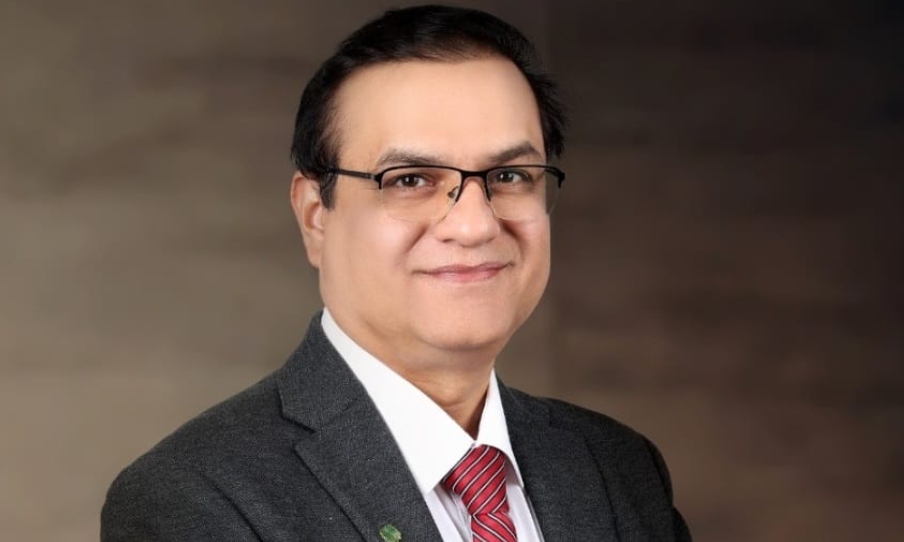
Inside the server rooms, the steady hum of high-performance computing clusters echoes around tens of petabytes of clinical data—massive datasets containing the keys to the next generation of patient care. At the heart of this intersection between technology, research, and innovation is Dr. Mansoor Ali Yusuf Baig. A seasoned digital transformation and AI strategist, Dr. Baig has been instrumental in driving the digital evolution of Research & Innovation at King Faisal Specialist Hospital and Research Centre (KFSHRC). In his role as a Senior Technical Specialist / Technology Expert, Digital Information Orchestrator and previously the Head of Scientific Computing for Research and Innovation at King Faisal Specialist Hospital & Research Center, he masterfully translates complex processing power into direct clinical impact.
His journey into elite medical technology began unexpectedly in the mid-1990s, just as the internet was transitioning from an academic novelty into a global commercial force. Starting out in web and graphic design, he built a strong foundation in design thinking and user interaction. This rare, human-centric perspective ultimately guided his trajectory toward advanced web development and enterprise systems. Recognized as one of the Arab world’s 30 Most Influential Leaders in Tech to Follow in 2026, Dr. Baig leverages his diverse background to ensure high-level medical computation is accessible, secure, and profoundly effective.
Growing up alongside rapidly evolving computers and software, Dr. Mansoor viewed technology as an active problem-solving tool rather than a standard career track. Over the years, his curious nature led him to accumulate technical knowledge across computer hardware, software development, database management, server infrastructure, security protocols, and system architecture.
Crucially, his interest extended far beyond pure technology into vital business functions, including sales, marketing, finance, and customer service. This multidimensional perspective gives him the unique ability to design enterprise-wide transformation strategies that harmonize technical capabilities with organizational realities. For the past seventeen years, he has dedicated his skills to the Research and Innovation group at KFSH&RC, running its scientific computing functions while collaborating with key governmental institutions like the Saudi Food and Drug Authority, the United Nations Development Programme, and the Saudi Health Council on prominent national initiatives.
Lately, managing the comprehensive digital transformation of the Research and Innovation group has stood out as his most compelling program. Dr. Mansoor focuses entirely on turning raw data into measurable clinical impact by building the robust digital infrastructure, clear data governance, and specialized talent needed to deploy artificial intelligence and data science safely at scale. His team supports clinicians and researchers with secure high-performance computing, integrated data platforms, and applied AI solutions. These advanced tools run the gamut from smarter diagnostic imaging software and predictive patient-flow models to AI-enabled research pipelines. By embedding these systems directly into clinical and research workflows, Dr. Mansoor moves beyond mere technical experimentation. He delivers platforms that actively accelerate scientific discovery, optimize hospital operations, and improve patient outcomes.
Dr. Mansoor stands before a wall of monitors displaying real-time computing metrics, preparing to integrate a new set of deep-learning algorithms into the active hospital network.
Focusing on Outcomes Over Technology
How does he ensure that digital transformation initiatives genuinely improve clinical and research outcomes rather than simply modernizing systems? He makes sure every digital transformation initiative starts with a clear clinical or research problem, not a technology mandate. He works with clinicians and scientists to define what “success” should look like in their terms, whether that is fewer adverse events, faster recruitment for a study, reduced time to diagnosis, or better data quality, then designs the solution, data flows, and workflow changes around those outcome metrics. From there, we treat technology as an enabler: we co-design workflows, pilot on a small scale, compare before and after performance, and only scale when we see measurable improvements in those agreed upon outcomes. Working with these initiatives creates a solid foundation to take the digital transformation initiative on an enterprise level, when we are able to develop an intelligent enterprise with all its systems digitized and digitalized to create a perfect symphony through a very well-orchestrated AI ready data lake. Equally important, he invests heavily in governance, human-centered design, and change management so that new systems are usable, trusted, and actually adopted. That means involving front-line users early, aligning with privacy and safety standards, setting up continuous monitoring of key KPIs, and being willing to iterate or even roll back if something doesn’t help clinicians, researchers, or patients. In short, he measures success not by how modern the technology stack looks, but by the tangible improvements it delivers to patient care, research productivity, and user experience.
Building Ethical and Safe Medical AI
AI adoption in healthcare often raises concerns around ethics, data governance, and patient privacy, requiring a careful strategy when implementing intelligent healthcare systems and research platforms. He would start from the principle that if AI is going to touch a patient, even indirectly, it has to be held to the same ethical, privacy, and safety standards as any other clinical technology. That means he does not treat ethics and governance as an add-on; they are built into the design and approval process from day zero. In practice, he would align our work with Good clinical practice and global guidance such as WHO’s principles on AI for health, which can help us formalize clear policies around data use, consent, bias assessment, and model validation before anything goes near production.
Leadership Principles for Complex Ecosystems
Having extensive expertise in enterprise IT strategy, software development, and scientific computing, certain leadership principles have helped him successfully manage multidisciplinary teams and complex digital ecosystems. He’s found that three leadership principles make the biggest difference: clarity, collaboration, and accountability. He would start by giving teams a clear outcome-based vision instead of a technology-centric one, so clinicians, researchers, and engineers all understand the “why” in their own language. He then creates psychologically safe, highly collaborative environments where multidisciplinary experts can challenge ideas, co-design solutions, and learn from each other without silos. Finally, he insists on strong execution discipline, clear ownership, measurable KPIs, transparent decision-making, and regular retrospectives, so complex digital ecosystems remain stable, scalable, and aligned with real clinical and research needs. Working with multi-disciplinary teams is fun, you just have to be “One of them”, while working with clinicians, scientists, engineers, nurses, or technicians, don’t involve yourself as a technical expert, just be a part of the team.
Navigating Disruptive Digital Disruption
He is also recognized as a speaker and thought leader in digital transformation and AI, sharing specific key messages with technology professionals and organizations navigating rapid digital disruption. Start with real problems and people, not with technology. Digital transformation and AI only create value when they are tied to clear outcomes, ethical guardrails, and measurable impact. And in a world of rapid disruption, the real differentiator is not how advanced your tools are, but how adaptable, learning-oriented, and mission-driven your teams are. “Every day of yours should be a new learning experience,” no matter if its technical, educational, informal, spiritual or just observational, it always benefits in long run. Dr. Mansoor evaluates the current server configurations, ensuring his department remains prepared to learn from the next technological shift.
Empirical Advice for the Next Generation
Many aspiring professionals look up to leaders who successfully bridge technology with societal impact, seeking direction on how to create meaningful change in healthcare and enterprise technology. To create meaningful change, treat technology as the tool rather than the ultimate goal. The most successful innovators start by deeply understanding a human problem whether it is a clinical bottleneck in healthcare or an operational friction point in an enterprise and design their AI solutions around that specific reality. “My Second advice is about “Who does AI”? AI is not an IT problem, the leaders in AI are the people who have the complete domain knowledge along with the understanding of their data, so for me the best leaders to do AI in healthcare are the clinicians, who hold the overall knowledge about their domain and sub-domain.”
A Computational Health Vision for the Region
Looking ahead, he holds a clear long-term vision for the future of scientific computing, AI-driven healthcare research, and digital transformation across the Arab region. “My long-term vision for the Arab region is to transition our healthcare ecosystems from consumers of global technology to primary creators of medical innovation. Driven by bold national mandates like Saudi Vision 2030, our region has successfully leapfrogged decades of legacy IT inertia.” The future will not be about simply automating clinical workflows or deploying generic, off-the-shelf algorithms. “Instead, the ultimate destination is the establishment of a fully integrated, sovereign computational health architecture that turns regional data into our greatest clinical asset.” If given a higher leadership role in healthcare technology, he would invest in developing Arab Sovereign Healthcare systems, Specialized language models for healthcare and its sub domains, synthetic data factory, Research platforms and a lot more and he has enough knowledge of what’s available, what’s not and what the global demand and supply is. Dr. Mansoor maps out these requirements against emerging institutional needs, ready to push the boundaries of regional biomedical engineering.