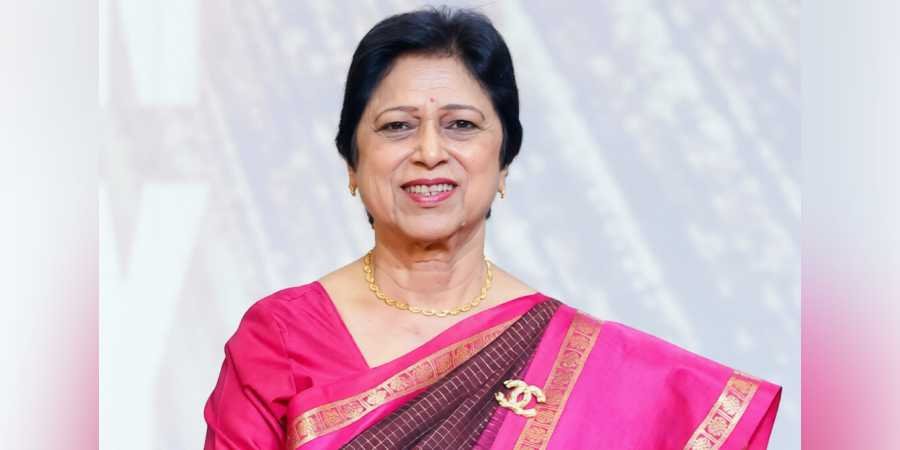
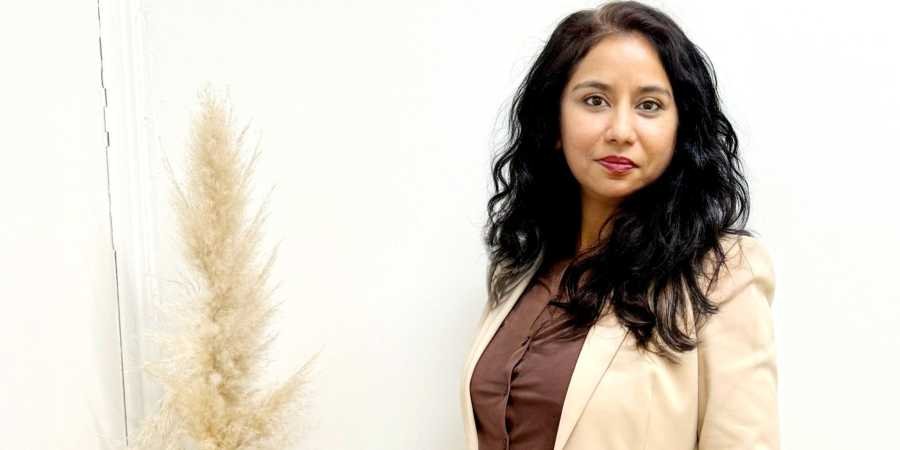
Education is a profession built around people. At its heart is the ability to help students feel confident, curious and capable of learning, regardless of their background or starting point. Mable Maria Newton, Deputy Head of Secondary at GEMS Founders School – Al Mizhar, has built her career around this belief, describing herself as a teacher by choice. Guided by Brad Henry’s philosophy, “A good teacher can inspire, ignite the imagination and instill a love of learning,” Mable brings 28 years of teaching experience across India, Qatar and the UAE, working with British, ICSE, CBSE and international curricula.
A postgraduate in English Literature, Mable is a patient and dedicated English teacher with experience working with children and adults from diverse cultural and ethnic backgrounds. Her work has focused on developing language skills and creating interactive learning within group settings, while also giving additional one-to-one support to students who find lessons difficult or are performing below expectations.
Her experience as an ESL instructor has further strengthened her ability to work with learners from different cultures and respond to varied learning needs, reflecting her belief in giving every student the support and encouragement needed to progress.
What Three Decades Across Cultures Have Taught Her
Mable’s career in education has taken her across India, Qatar and the UAE, with experience spanning British, ICSE, CBSE and international curricula. Yet it is the diversity of students, families and communities she has worked with that has shaped her most. Over more than three decades, she has learnt that while educational contexts may differ, every child wants to feel valued, understood and capable of succeeding.
Working with students from more than 97 nationalities has strengthened her belief that education must remain academically ambitious while being deeply human. It has also shaped her approach to leadership, grounded in empathy without losing sight of high expectations.
From Classroom Teacher to Senior Leadership
Mable’s progression from classroom teacher to Head of Year, Head of ELL, Head of Multilingualism and Cultural Integration, and now Deputy Head of Secondary has had a direct influence on how she leads. Her years in the classroom ensure that she remains conscious of the realities faced by those implementing strategies every day. She understands the pressures teachers carry, the complexity of classrooms and the difference between a policy that looks effective on paper and one that genuinely works in practice.
As a senior leader, she strives to remain visible, approachable and focused on solutions. To her, leadership is not about having every answer, but about listening carefully, developing people and creating the conditions in which staff and students can thrive.
Balancing Achievement with Wellbeing
Mable sees effective educational leadership as maintaining a clear balance between academic excellence, wellbeing, inclusion and professional growth. She does not view these as competing priorities. A student who feels safe and connected is more likely to engage with learning, while a well-supported teacher is better placed to deliver consistently strong teaching.
Strong teaching, in turn, supports better outcomes. Her role is to keep students at the centre while drawing on evidence, professional judgement and collaboration to make decisions. She also believes accountability must come with support. High expectations are most effective when people know their leader is invested in helping them meet them.
Seeing Multilingualism as an Asset
Mable’s work in multilingualism and ELL has deepened her understanding of inclusion. Supporting students who arrive with little or no English has shown her that language should never prevent a child from accessing a rich curriculum or feeling that they belong. Targeted intervention, individual learning plans, bilingual resources, visual scaffolding, strategic seating, vocabulary development and collaboration between ELL and mainstream teachers all have an important role.
Yet inclusion extends beyond these strategies. Mable believes schools should create a culture where multilingualism is viewed as an asset rather than a deficit. Her philosophy, “Every Teacher is a Language Teacher,” reflects her belief that language development is a responsibility shared across the whole school.
Designing Curriculum Around the Learner
Experience across different curricula has reinforced Mable’s belief that effective curriculum design should begin with the learner rather than the specification. A strong curriculum must provide appropriate challenge while remaining accessible, coherent and responsive to students’ starting points. Her experience across different systems has made her less interested in simply comparing curricula and more focused on what works: strong subject knowledge, purposeful sequencing, explicit vocabulary instruction, meaningful assessment, effective scaffolding and opportunities for independent thinking.
Ultimately, she sees a student-centred curriculum as one that develops knowledge alongside curiosity and the ability to apply learning.
Understanding the Message Behind Behaviour
Mable’s experience with behaviour has taught her that behaviour is often a form of communication. Positive behaviour support works best when schools seek to understand the underlying need rather than simply reacting to what they see. Clear expectations, consistency, strong relationships, routines and early identification form the foundation of a preventative approach. When difficulties arise, restorative conversations and personalised strategies can help students take responsibility while understanding the impact of their actions.
Mable believes consequences have a place, but they should sit within a wider approach that helps students develop the skills needed to make better choices.
Recognising Disengagement Early
Mable views attendance as closely connected to student engagement and academic progress. Absence can often be an early sign that something is not working for a student, making it important for schools to identify patterns before attendance becomes a serious concern. Combining attendance data with academic, pastoral and behavioural information can provide a clearer picture of what a student may be experiencing. Early conversations with students and families, trusted relationships with adults, personalised support and recognition of improvements can all help.
In Mable’s experience, students are more likely to re-engage when they feel that someone genuinely cares and is willing to help them succeed.
The Question Behind Every New Idea
Mable believes educational leaders need to give teachers both freedom and accountability when encouraging innovation. Change should never happen simply for the sake of change. The important questions are what problem a new approach is intended to solve, what evidence suggests it will benefit students and how its impact will be measured. She encourages teachers to experiment, share practice and learn from mistakes while maintaining clarity around essential areas such as safeguarding, curriculum expectations, assessment and student outcomes.
For Mable, innovation works best when professional freedom is matched by a clear sense of purpose and responsibility.
Professional Learning into Everyday Practice
Mable has found that the strongest professional development is purposeful, evidence-informed and practical. It begins with identifying a genuine need through student data, learning walks, lesson observations, staff feedback or school improvement priorities, then giving teachers strategies they can use immediately.
Her work leading ELL and multilingualism has included professional development on scaffolding, vocabulary instruction, language-support strategies, referral processes, NGRT data triangulation and platforms such as Flash Academy and Reading Wise. The value of this learning becomes greater when teachers have the chance to put new approaches into practice, reflect on the results and return to colleagues to share what worked. Mable sees this cycle of trying, reflecting and collaborating as central to strengthening teaching quality.
Using Technology Without Losing the Teacher
Technology and artificial intelligence are set to reshape secondary education through adaptive learning, feedback, accessibility and personalised support. Mable believes their greatest value will come when teachers use these tools intelligently rather than allowing technology to replace professional judgement.
The growing role of AI also makes critical thinking, digital literacy, academic integrity and responsible use increasingly important. Students need more than the ability to operate new tools. They need to understand when and why those tools should be used and how to use them responsibly.
Belonging Should Not Need a Special Day
Having worked extensively with culturally diverse communities, Mable believes genuine belonging is built through everyday school experiences rather than occasional cultural celebrations. Students should see their languages, cultures and identities reflected in the curriculum, literature, displays and wider life of the school.
They should also have meaningful opportunities to contribute, lead and share their experiences. Mable sees true inclusion as a move beyond simply “celebrating difference” towards valuing difference as a natural and important part of the school’s identity.
Priorities for Secondary Education in the Middle East
Looking across the Middle East, Mable believes secondary education can continue to benefit from greater investment in inclusive practice, student wellbeing, teacher development, multilingual education and future-ready skills. Schools need to prepare young people for more than examinations.
The wider goal is to equip students to navigate a changing world with resilience, cultural intelligence, strong communication skills and a clear sense of responsibility.
A Legacy Built Through People
Mable’s vision for secondary education brings excellence and compassion together. She wants to help create environments where every student is challenged while receiving the support needed to succeed, where teachers feel valued and continue to develop, and where families feel genuinely connected to the school community.
The legacy she hopes to leave is not defined by a particular programme or title, but by people. It is seen in students who develop confidence in themselves, teachers who grow through the opportunities they receive and a school culture that continues to make a difference after she has moved on. Mable’s view of leadership remains rooted in the small, meaningful differences made each day and the lasting impact they can create over time.